Russia eVisa
Apply Now
Russian Federation unified eVisa

Russia eVisa for Turkish Citizens: 2026 Application Guide

Turkish ordinary-passport holders are eligible to request Russia’s unified electronic visa online. The visa is single entry, valid for 120 days from issue and permits a stay of up to 30 days. Submit between 86 and 4 days before arrival, use a passport valid for at least six months on the application date, and plan to cross the Russian border through an approved eVisa checkpoint.

Official decision timeUp to 4 calendar days
Visa validity120 days from issue
Maximum stayUp to 30 days
EntriesSingle entry
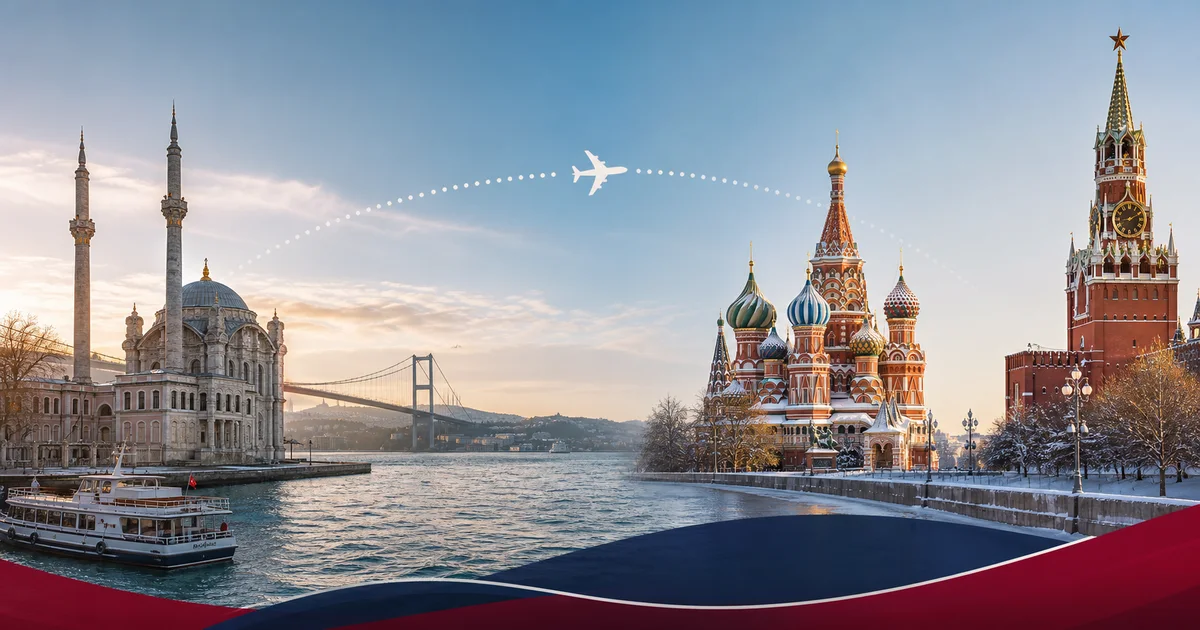
Turkey to Russia eVisa travel planning

Can Turkey citizens apply for the Russia eVisa?

Yes. Turkey is included in the Russian unified electronic visa programme for qualifying short visits.

A Turkish applicant needs the ordinary passport that will be used for travel, an accurate online form and a recent digital facial photograph. The passport must have at least six months remaining when the application is submitted. An invitation, hotel confirmation or document proving the stated visit purpose is not required by the official unified eVisa process.

Names must follow the passport data page, not a Turkish airline profile or an informal Latin spelling. Pay particular attention to dotted and dotless I, Turkish characters, multiple given names and the machine-readable zone. The issued notification and airline booking should identify the same traveller without ambiguity.

Official sources used for this guide

This page was fact-checked on 19 August 2026 against the Russian Foreign Ministry application instructions, the official unified eVisa portal, the authorized checkpoint list and the official eVisa FAQ. e-visarussia.ru is an independent application-assistance service, not a Russian government website.

Fact checked · August 19, 2026Official rules are separated from our independent application-assistance service. No approval or admission guarantee is made.

How many Turkey travellers entered Russia with an eVisa in 2026?

From January through July 2026, Russia recorded 38,369 eVisa entries connected to Turkey travellers, placing this market at number 1 among the project’s priority countries.

2026 Russia eVisa statistics for Turkey
eVisas issuedRecorded entriesShare of all entries
43,39338,36916.6%

Turkey produced the highest number of recorded eVisa entries in the first seven months of 2026, making Turkish travellers the largest current eVisa audience for Russia. The figures come from the Russian Foreign Ministry’s electronic-visa open dataset, updated on 10 August 2026. “Issued” and “entry” are separate measures and should not be read as a same-period approval conversion rate.

Review the Russian Foreign Ministry electronic-visa dataset.

What you actually need to start

The official unified eVisa form does not require an invitation, hotel confirmation or document proving the purpose of travel.

1

Turkey ordinary passport

The same passport intended for travel, with at least six months validity remaining when the application is submitted.

2

Complete passport data-page image

A clear, uncropped image showing all identity fields, document edges and the machine-readable zone.

3

Separate recent facial photograph

A compliant current portrait, not the small picture cropped from the passport page.

4

Accurate application data

Passport-exact names, number, dates, citizenship and personal answers reviewed before submission.

5

Valid contact details

An accessible email address and retained application ID for status notices and corrections.

6

Russia-valid medical insurance for travel

Coverage for the full stay unless the traveller qualifies for a reciprocal exemption.

Application process from passport to border

1

Confirm eligibility and purpose

Make sure the planned short visit fits the unified eVisa and uses the selected passport.

2

Prepare identity files

Create a complete passport-page image and a separate compliant portrait.

3

Enter and audit the form

Check every name, number and date against the physical passport.

4

Submit and monitor status

Pay through the selected process, retain the ID and respond carefully if correction is requested.

5

Verify the issued notification

Confirm identity, validity, insurance and approved entry and exit checkpoints before travel.

Guidance written specifically for Turkey travellers

Can Turkish citizens apply for a Russia eVisa in 2026?

Yes. Turkey is one of the nationalities eligible for Russia’s unified electronic visa. Eligibility belongs to the passport holder, while the journey must still meet the eVisa purpose, date and checkpoint conditions.

For a Turkish traveller, the useful first question is not simply “Do I need a visa?” but “Does the unified eVisa fit this exact trip?” It is designed for tourism, private visits, business and qualifying humanitarian, cultural, scientific, sporting or socio-political visits. It is not a work permit, residence permission or long-term study document.

A person who already holds a usable regular Russian visa does not need a second electronic visa for the same visit. Dual nationals must also consider which passport they will present. A Russian citizen cannot obtain the unified eVisa, even if that person also holds Turkish citizenship. The passport chosen in the application must be the passport shown to the carrier and border officer.

Families should treat every traveller as a separate applicant. A child cannot travel on a parent’s approval. The official consular fee is waived for children under six, but an individual application and correctly matched passport details are still necessary.

How should Turkish names be entered on the Russian eVisa form?

Enter the Latin-script identity exactly as printed in the passport and verify it against the machine-readable lines before submission.

Turkish names create avoidable mistakes when an applicant types from memory. Characters such as Ç, Ğ, İ, Ö, Ş and Ü may appear in a standardized Latin form in the machine-readable zone. Do not create your own translation, remove a second given name because it is rarely used, or copy a shortened name from a bank card.

Read the passport field by field: surname, given names, sex, date of birth, place of birth, passport number, issuing authority, issue date and expiry date. Then compare the number and name pattern with the machine-readable zone at the bottom. Confusing the letter O with zero, or I with the digit one, can connect the approval to the wrong identity.

If a flight booking compresses spaces or joins given names, that does not automatically mean the ticket is invalid. The visa form, however, should remain passport-exact. Resolve a material airline mismatch with the carrier before departure rather than changing correct visa data to imitate a booking-system limitation.

Which routes and checkpoints can Turkish eVisa holders use?

Entry and exit must take place through checkpoints authorized for unified eVisa travel; an approved eVisa is not accepted at every Russian border crossing.

Flights from Istanbul or other Turkish airports often lead to Moscow, Saint Petersburg, Kazan, Sochi or regional connections. Major airports appear on the official checkpoint list, but applicants should verify the current list for the exact airport shown on the ticket. A domestic connection after lawful entry is different from making the first border crossing at an unapproved point.

Road travel deserves extra care. A route through Georgia toward the Upper Lars checkpoint, or a Black Sea itinerary involving land or maritime sectors, should be checked against the current approved list rather than assumed valid. The same rule applies on departure: an eVisa traveller cannot leave through a border point that is absent from the list merely because entry occurred correctly elsewhere.

Transit permission in a third country is separate from Russia’s eVisa. If the itinerary changes after approval, re-check the new Russian entry point, the eVisa dates and any transit rule. Keep the approval notification accessible offline because mobile data may not be available at the first document check.

When should a Turkish citizen submit the application?

The official window opens 86 days before expected entry and closes 4 days before entry; processing takes no more than 4 calendar days after a complete submission.

The four-day limit is an official processing ceiling, not a sensible reason to wait until the final moment. A returned form must be corrected and resubmitted, and the clock then runs from the amended submission. Public holidays and weekends are included in the official calendar-day calculation, but a passport or photo problem can still consume the applicant’s travel buffer.

Turkish travellers should choose an intended entry date they can realistically keep. The visa remains valid for 120 days from issuance, but the permitted stay is no more than 30 days from actual entry and never beyond the visa expiration date. These are two separate limits. A late arrival does not move the printed visa expiry forward.

A practical workflow is to prepare the passport scan and portrait early, submit once the itinerary is reasonably stable, and avoid non-refundable commitments that depend entirely on approval. After issuance, compare every identity field and date with the passport before checking in.

Is the eVisa suitable for Turkish family, tourism or business travel?

It can cover tourism, private visits and eligible short business or event travel, but it does not authorize employment or residence.

Turkish-Russian family connections make private visits common. The electronic application does not require an invitation to prove that visit, yet the traveller should still know the host address and be able to explain where the stay will occur. A hotel normally completes migration registration; a private host may need to arrange the arrival notification under Russian rules.

A genuine business visitor may attend meetings, negotiations or qualifying events within the permitted scope. Performing paid work for a Russian employer, taking up a job, or using repeated short visits as de facto residence is different. The correct visa or migration route should be chosen before travel.

Tourists can move within Russia after lawful entry, except in territories or facilities requiring special permission. The eVisa does not confine the visitor to the city of arrival. It does, however, retain its single-entry character: leaving Russia normally ends that visa even when unused validity days remain.

What mistakes most often put a Turkish application at risk?

The highest-risk errors are passport transliteration mismatches, an unsuitable portrait, incorrect dates, a wrong passport number and an unapproved border route.

A clean file begins with the physical passport rather than saved browser data. Autocomplete can insert a Turkish national ID number into the passport field or restore an old passport expiry. Photograph problems include shadows, filters, a patterned background, cropped head position and reusing the tiny portrait extracted from the passport scan.

Applicants sometimes confuse the visa validity period with the permitted stay, or type the planned departure as though it controls the visa. The authority issues the actual dates. Another common mistake is selecting a route first and checking the border point later. Checkpoint eligibility belongs in the planning stage, not at airline check-in.

Do not submit several speculative applications for the same person. Keep the application ID, monitor status in the official account, and correct a returned form carefully. Our assistance service can check data consistency and file readiness, but only the Russian authorities decide issuance and border admission.

What should a Turkish traveller do after approval?

Download the grant notification, verify it, carry the matching passport and insurance, and use only approved entry and exit checkpoints.

The notification can be printed or stored on a mobile device. A paper copy is useful when a carrier’s desk has limited connectivity. The passport used in the application must remain valid and undamaged. Foreign eVisa holders are generally required to carry medical insurance valid in Russia for the entire stay unless a reciprocal exemption applies.

At the border, approval does not remove ordinary checks. Be ready to state the purpose, address and intended length of stay. Keep practical evidence of accommodation and onward plans even though those documents were not required to obtain the eVisa. If staying at a hotel, staff normally handle migration registration; for private accommodation, confirm the host’s responsibility promptly.

Count the authorized stay conservatively and leave through a listed checkpoint before both the stay limit and visa expiry. Weather, road delays and cancelled flights do not create an automatic extension. Exceptional extension procedures are narrow and should never be treated as travel planning.

Entry, insurance and registration

Approved checkpoints: the eVisa is accepted only at border points on the Russian Government’s current list. Entry through one approved point does not permit departure through an unlisted point.

Medical insurance: eVisa visitors generally need insurance valid in the Russian Federation for the complete stay unless a reciprocal exemption applies.

Migration registration: hotels normally register foreign guests. For private accommodation, the host should follow the current arrival-notification procedure, generally within seven working days.

Check the official eVisa border-point list before confirming the final route.

What an approved Russia eVisa does — and does not do

An issued unified eVisa gives the named traveller permission to present the linked passport at an authorized Russian checkpoint during the printed validity period. It removes the need to obtain a visa sticker at a consulate for the eligible visit. It does not replace the passport, medical insurance, carrier checks or the Border Service’s final admission decision.

The permission is single entry. Once the traveller leaves the Russian Federation, the same eVisa cannot normally be used for a second arrival, even when its 120-day validity period has not ended. The validity period is also not the permitted length of stay. The visitor may remain for no more than 30 days after entry and never beyond the expiry printed on the visa.

The eVisa does not authorize employment, permanent residence or long-term education. A short business meeting and paid work are not the same activity. Likewise, an approved visa does not grant access to territories, facilities or border zones that require separate permission. Travellers should describe the real purpose and obtain any additional authorization that their activity needs.

Our Normal and Fast options provide different levels of independent application assistance. They do not create different Russian government visa categories, change the official four-calendar-day review standard or buy a favourable decision. The useful role of assistance is narrower: identifying passport inconsistencies, unsuitable uploads, date conflicts and route misunderstandings before they become avoidable application problems.

After issuance, read the notification rather than relying on a payment receipt or email subject line. Verify the name, passport number and dates; download an offline copy; check the exact entry and exit points; and make sure the insurance covers the intended Russian stay. Those checks connect the online approval to a journey that can actually be completed.

If the passport is lost, damaged or replaced after issuance, do not assume the electronic permission transfers to the new document. The visa record is tied to the passport information used in the application. Contact the appropriate Russian authority for current instructions and resolve the document position before boarding. The same cautious approach applies when a traveller discovers a material spelling, number or date error after approval.

Questions from Turkey applicants

Do Turkish citizens need an invitation for a Russia eVisa?

No. The official unified eVisa process does not require an invitation, hotel booking or another document confirming the visit purpose.

How long can a Turkish citizen stay in Russia with an eVisa?

Up to 30 days from entry, within the visa’s 120-day validity period and the exact dates printed on the issued visa.

Can I enter Russia twice with the same eVisa?

No. The unified electronic visa is single entry. A later journey normally requires a new appropriate permission.

Can a Turkish citizen work in Russia on an eVisa?

No. The eVisa does not authorize employment, long-term study or residence.

Can I cross from Georgia into Russia with an eVisa?

Only if the exact checkpoint is on the current official eVisa list and all route conditions are met. Verify it before travel.

Is medical insurance required?

E-visitors generally must hold medical insurance valid in Russia for the whole stay unless exempt under reciprocity.

ER

Reviewed by the eVisa Russia Editorial Desk

This guide is checked against Russian Foreign Ministry instructions, the authorized-checkpoint list, the official FAQ and the ministry’s nationality-level eVisa dataset. Country-specific passages are reviewed separately before indexing. We identify ourselves as an independent assistance provider, distinguish service prices from official charges and correct material rule changes when verified. Questions or correction requests can be sent to [email protected].