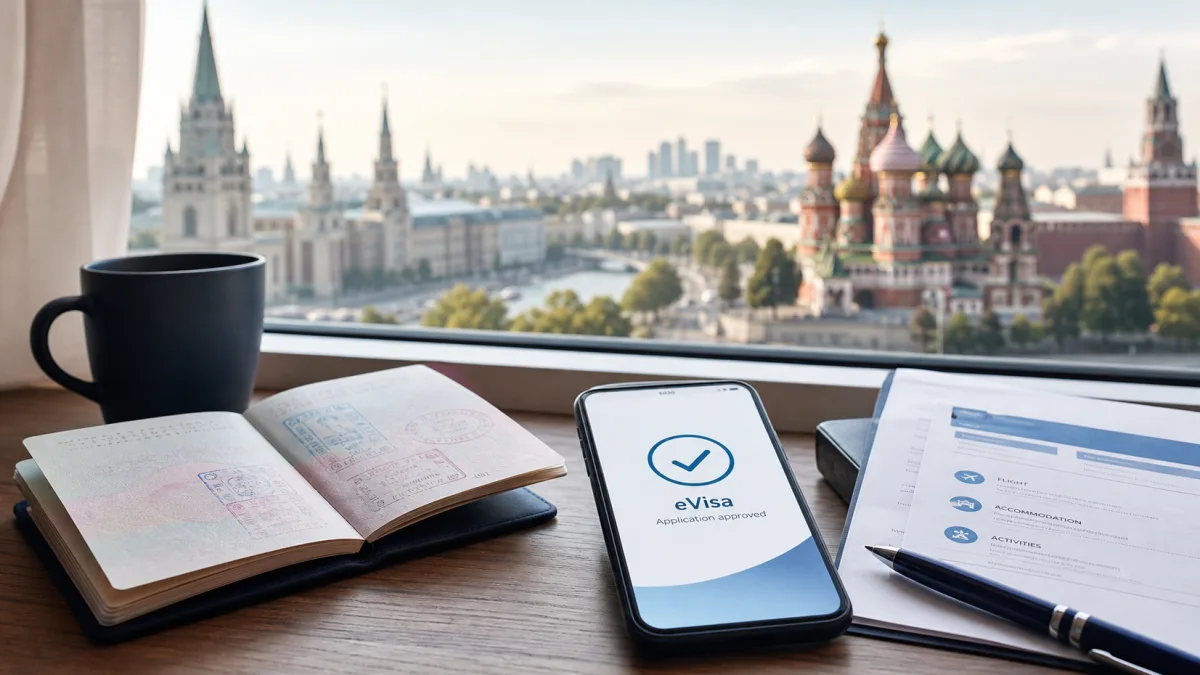
Russia eVisa Entry Checkpoints: Airports, Routes and Flight Changes Explained
Russia Visa Guide Article Details
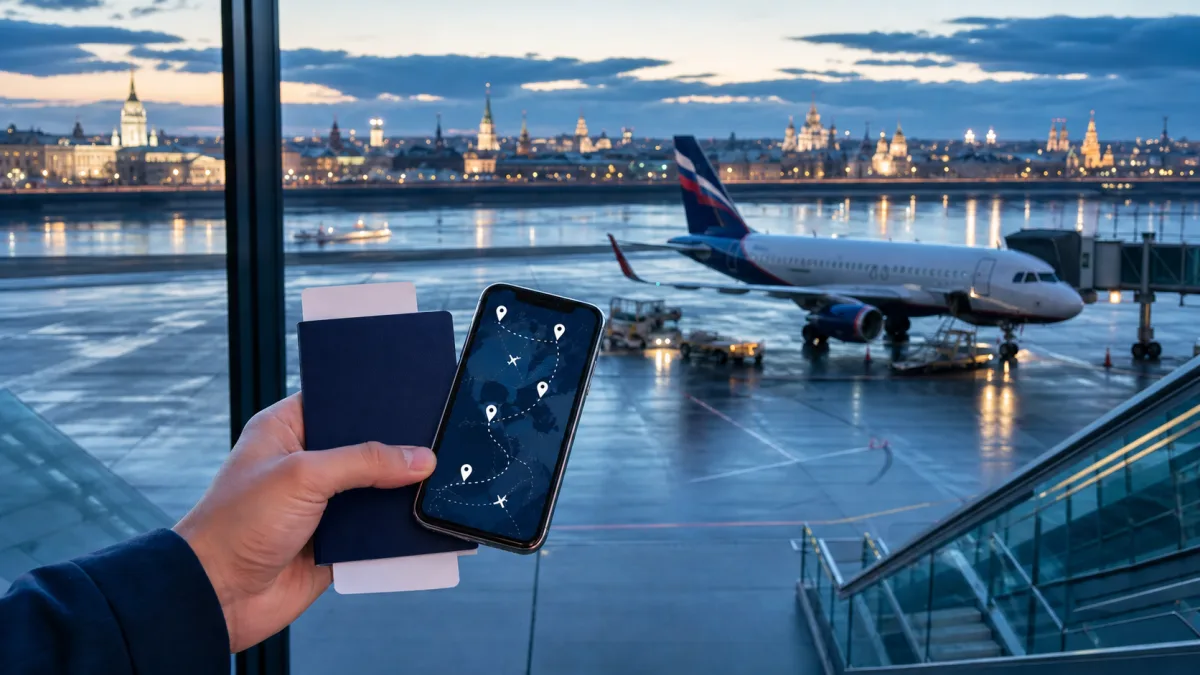
A Russia eVisa is valid only through border checkpoints authorized for the unified electronic visa, and the rule applies to both entry and exit. A ticket to “Moscow,” “Saint Petersburg” or another Russian city is not enough to prove compliance. Travellers must match the exact airport, land crossing, seaport or other border facility and transport mode to the current official list.
This route guide is designed for the moment between visa research and ticket purchase. It explains how to read an itinerary, separate transit permission from Russian entry permission and react when an airline changes the final airport. It does not reproduce a static list that may become outdated. Instead, it shows a repeatable method using the Russian Foreign Ministry’s live checkpoint source.
Quick answer: how do I know whether my route works?
Write down the exact point where Russian border control will occur on arrival and departure. Find those formal checkpoint names in the current government list and confirm the listed mode matches your journey. Then check foreign transit rules separately. Repeat this verification after every material schedule or airport change and again shortly before travel.
| Route question | What to verify |
|---|---|
| Which city? | Useful for planning, but not enough for checkpoint eligibility. |
| Which airport or crossing? | Match its exact formal name to the authorized list. |
| Which transport mode? | Air, road, rail, sea and pedestrian facilities are not interchangeable. |
| Foreign connection? | Check that country’s transit/entry requirements separately. |
| Exit route? | It must also use an authorized checkpoint. |
| Schedule change? | Recheck airport, date, terminal transfer and visa validity. |
Why a city name is not a checkpoint
Large cities can be served by several airports. Search results and booking platforms often display the city while hiding the airport code until later. Two airports near the same city can have different operational or authorization status. A traveller who checks only the destination label may discover the problem after a carrier reroutes the flight.
Land-border geography creates a similar trap. A border town can contain more than one facility for different transport modes. A road checkpoint does not automatically authorize rail or pedestrian use. The official name and mode should align with the ticket, vehicle or crossing plan. “It is on the same border” is not an immigration rule.
Step 1: map the complete itinerary
List every sector from the true origin to the first place you clear Russian border control. Include domestic feeder flights, connection airports, overnight stops, airport changes and separately ticketed sectors. Do the same for departure from Russia until the journey reaches a point where no further Russian border event occurs.
This map answers questions a simple booking confirmation may hide. Will baggage be checked through? Must you pass immigration in a connection country? Is there a landside terminal transfer? Does a domestic Russian sector follow international arrival? Which airport code appears on the final inbound and first outbound international segments?
Keep the final itinerary offline. At check-in, staff may focus on the first sector and still need to verify the Russian destination. A one-page route summary helps the traveller explain connections without opening several applications. It is a planning document, not an extra visa upload.
Step 2: identify the first Russian border checkpoint
For a direct international flight, this is usually the arrival airport. For a connection inside Russia, border control normally occurs at the first Russian airport, before the domestic sector. Do not check only the final city. If the itinerary lands internationally in Moscow and continues domestically, the relevant entry checkpoint is the Moscow airport shown on that first arrival.
For land or rail travel, use the formal crossing stated by the operator and compare the mode. A train station, road crossing and nearby town may share geographic language but represent different checkpoints. Ask the carrier for the exact border facility if the ticket is unclear, then confirm it against the official eVisa list.
Step 3: confirm the exit checkpoint independently
Entry through an authorized airport does not permit departure through any border. The official FAQ explicitly says eVisa holders cannot leave through a checkpoint outside the approved list. Check the outbound facility using the same method as arrival, including the transport mode and exact airport code.
A side trip can also consume the single entry. If you enter Russia, leave for another country and plan to return, the same eVisa cannot support the second entry. Visa validity remaining on the calendar does not restore a used entry. Build the itinerary around one entry and one exit unless another valid document supports the return.
Step 4: treat transit permission as a separate legal question
A Russia eVisa authorizes admission to Russia; it says nothing about entering or transiting a third country. Visa-free airside transit may depend on passport nationality, airport, terminal, connection length and whether baggage is through-checked. Separate tickets can require collection and re-check, turning an apparent transit into an entry.
Airport changes almost always deserve closer review because travellers may need to cross the foreign border and travel landside. Overnight connections can have special restrictions. Ask the relevant country authority and carrier rather than assuming a Russian visa will satisfy them. Keep written confirmation or authoritative guidance where possible.
What if the airline changes my airport?
Not every schedule change invalidates the journey. A time change at the same authorized airport may still fit the visa dates. A change to another Russian airport requires a new checkpoint check. A change to a foreign connection can alter transit requirements. A shift past midnight can alter the actual entry date.
Review changes in this order: exact Russian airport, actual border date, foreign transit, baggage and terminal movement, accommodation arrival, and outbound plan. Do not accept a replacement automatically because the airline calls it equivalent. Commercial equivalence and immigration equivalence are different.
Direct flight, one connection and separate-ticket examples
Direct international flight
The traveller leaves an eligible origin and lands at one Russian airport. Confirm the airport code and formal checkpoint name. Check that the arrival date falls inside issued validity. Carry the passport and notification. This is the simplest route, but “direct” does not remove the checkpoint requirement.
One protected airside connection
The traveller changes aircraft in another country without passing immigration and baggage is through-checked. Confirm foreign airside-transit eligibility and terminal access, then verify the Russian arrival airport. If the inbound delay causes a missed connection and the carrier reroutes through a different Russian airport, check again.
Separate tickets with baggage collection
The traveller holds two independent bookings and must collect baggage in the connection country. That may require legal entry there. Allow sufficient time and obtain any required transit or visitor authorization. Then confirm the final Russian airport. The eVisa cannot cure a problem before the Russia-bound flight begins.
International arrival plus domestic Russia flight
The traveller lands internationally, clears Russian border control and continues to another Russian city. Verify the first Russian airport as the entry checkpoint. Once lawfully admitted, movement is generally permitted except in restricted territories or facilities that require separate permission. Keep enough connection time for border and baggage procedures.
Land entry and air exit
Different entry and exit modes can be acceptable only when both named facilities are on the current authorized list for the relevant use. Check operational availability with carriers or border authorities. Legal inclusion does not guarantee that a service runs on the planned day.
Route planning for Moscow and Saint Petersburg
Search engines frequently collapse airports under a city label. Open the booking details and record the three-letter code. Do this for both arrival and departure. If the itinerary contains an airport transfer, identify whether it occurs abroad or inside Russia and whether border control has already occurred.
Do not copy an airport name from an old trip. Airlines change seasonal services and a booking engine may offer a different airport when the preferred flight sells out. The checkpoint review belongs to the current ticket, not the traveller’s memory of the city.
Route planning for rail, road and sea
Non-air travel can be more sensitive to current operations. A checkpoint may appear in a legal list while the desired passenger service is limited, suspended or available only to certain transport categories. Confirm the formal checkpoint, operating service, passenger acceptance and eVisa mode close to travel.
Do not rely on a map pin or informal forum report as final evidence. A road may lead to a border without the crossing accepting your vehicle or visa type. For ferries and cruise routes, confirm where immigration inspection occurs. For rail, identify the train’s actual border facility rather than only departure and arrival stations.
Documents to carry on travel day
- The same physical passport used in the application
- The issued eVisa notification, preferably accessible offline
- The complete itinerary with airport codes and booking references
- Accommodation name, address and telephone number
- Return or onward arrangements
- Medical-insurance evidence appropriate to the trip
- Any documents required by foreign transit countries
- Contact information for the carrier and accommodation
Approval does not guarantee boarding or admission. Carriers and border officers can verify identity, document validity, route and genuine purpose. Keep answers consistent with the submitted application. Do not carry a route summary that contradicts the intended accommodation or dates without understanding how the plan changed.
After arrival: movement and registration
The official FAQ states that eVisa visitors may move through Russia except in territories, organizations and facilities requiring special permission. The eVisa does not override local restricted-area rules. Research any remote border zone, military-sensitive area or controlled facility separately.
Migration registration is also separate from the visa. The official FAQ explains that notification of arrival is generally required within seven working days. Hotels normally handle it automatically. A private host should understand the applicable procedure and retain confirmation. Route planning ends only when lawful stay and departure are also organized.
Pre-booking checkpoint audit
- Write every airport code and land/sea/rail facility.
- Circle the first Russian border event.
- Confirm its exact name in the official eVisa checkpoint list.
- Confirm that its mode matches the journey.
- Repeat for the final Russian exit.
- Check every foreign connection independently.
- Verify actual border dates after time-zone changes.
- Check that accommodation begins when arrival makes sense.
- Keep a margin before the final lawful exit date.
- Repeat after schedule changes and shortly before departure.
How assistance can reduce route mistakes
Independent assistance can help translate a complex booking into the actual entry and exit facts used in the application. It is especially useful for multi-city routes, separate tickets, family groups or travellers unsure which airport code controls entry. Assistance cannot make an unauthorized checkpoint valid or waive a third country’s transit rule.
Our Normal Process ($115) includes standard application assistance; Fast Process ($225) prioritizes our review and support. These packages do not alter the official four-calendar-day decision standard or guarantee border admission. The useful outcome is a clearer, internally consistent file and earlier identification of route questions.
Route rule to remember: check the border facility, not just the city; check the mode, not just the location; and check the exit with the same care as entry.
Once the route and identity documents are ready, continue to the Russia eVisa application form. For the legal timetable, read the processing and travel-date guide. Applicants still assembling documents should start with the complete requirements checklist.
Before submission, cross-check the full requirements guide, run the passport and portrait audit and compare assistance in the fee guide. Browse nationality-specific preparation in the country directory or send an unresolved route question through the contact page.
Official sources and editorial note
Reviewed 24 August 2026 using the Russian Foreign Ministry’s live authorized checkpoint list, official eVisa FAQ and application instructions. Check the live list again before booking and travel. e-visarussia.ru is an independent assistance service.